
If you’ve been wondering whether devotional coloring books have gone the way of fidget spinners and adult onesies, I’ve got some surprising news for you. Not only are they very much alive in 2025, but they’re actually thriving in ways that might shock you.
Let’s dive into what’s really happening with creative worship and why millions of people are still reaching for those colored pencils as part of their spiritual practice.
The Numbers Don’t Lie: Creative Worship is Booming
Walk into any Christian bookstore today, and you’ll find entire sections dedicated to devotional coloring books. Faith & Life Bookstore currently stocks over 30 different titles, with prices ranging from $9.99 to $24.99. That’s not the inventory of a dying trend – that’s a thriving market segment.
Publishers are doubling down too. DaySpring just launched their “He Refreshes My Soul 2025-2026 18-Month Premium Devotional Coloring Planner,” combining monthly devotionals with full-page coloring designs. Meanwhile, titles like “My Sunday Gospel Coloring Book 2025” are flying off shelves, offering detachable coloring pages paired with simplified Gospel readings.
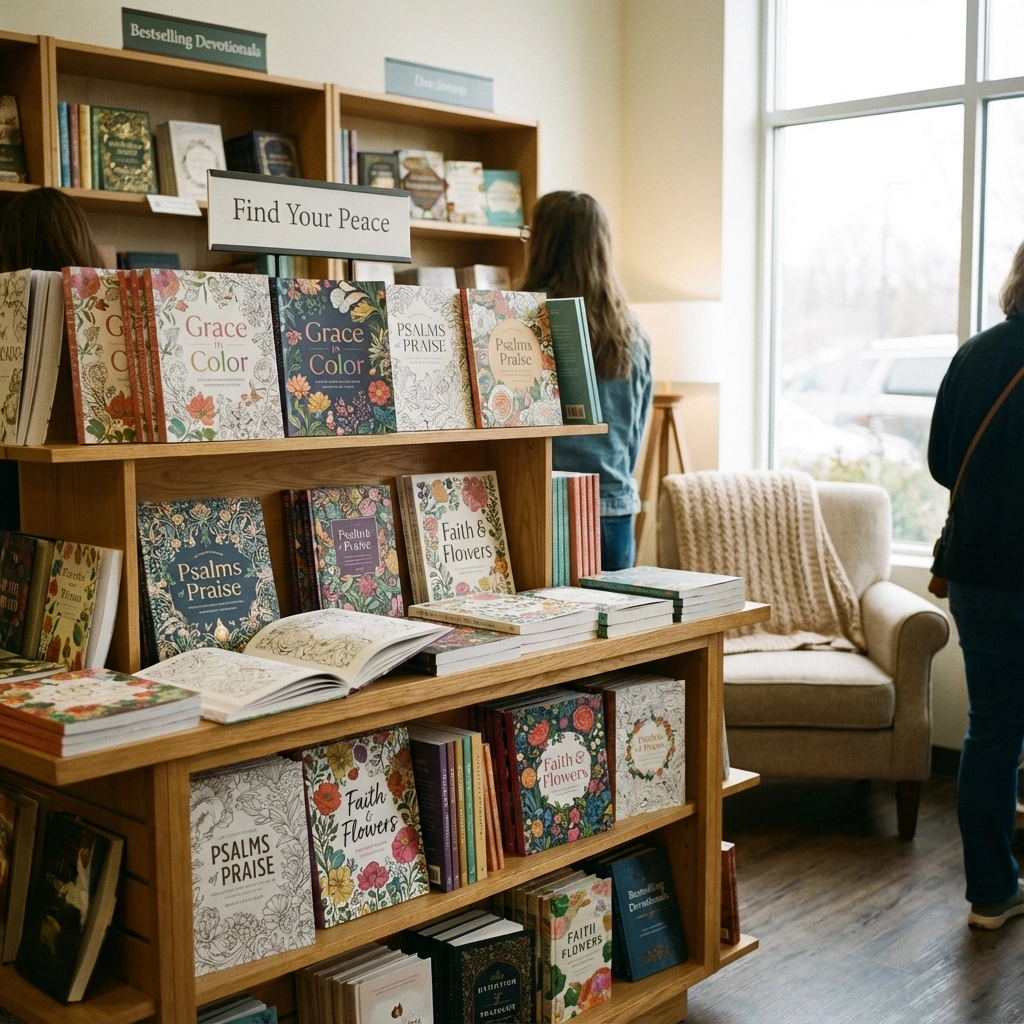
This isn’t just leftover inventory from the 2010s coloring book craze. These are fresh, purpose-built products designed specifically for today’s spiritual seekers.
Why Creative Worship Resonates More Than Ever
In our hyperconnected, always-on world, the need for mindful, hands-on spiritual practices has only intensified. Sarah Young, author of “Jesus Calling,” has long advocated for creative approaches to faith, noting that “God speaks to us through various means, including the quiet moments when our hands are busy and our hearts are open.”
The beauty of devotional coloring lies in its simplicity. Unlike complex spiritual disciplines that require extensive training or perfect quiet environments, coloring can happen anywhere. It’s worship that fits into real life – whether you’re waiting for kids at soccer practice or unwinding after a stressful workday.
Artist and author Ann Voskamp puts it perfectly: “Sometimes the most profound worship happens not when we’re speaking, but when we’re creating. Our hands become prayers, and our creativity becomes communion.”
The Science Behind Creative Worship
Here’s something that might surprise you: there’s actual research backing up what devotional coloring enthusiasts have known all along. Studies show that repetitive, creative activities activate the same neural pathways as meditation, reducing cortisol levels and promoting a state of calm focus.
Dr. Tim Keller, renowned pastor and author, has written extensively about how different personality types connect with God in unique ways. He argues that “for many people, engaging their creative faculties isn’t a distraction from worship – it’s a pathway to deeper spiritual connection.”
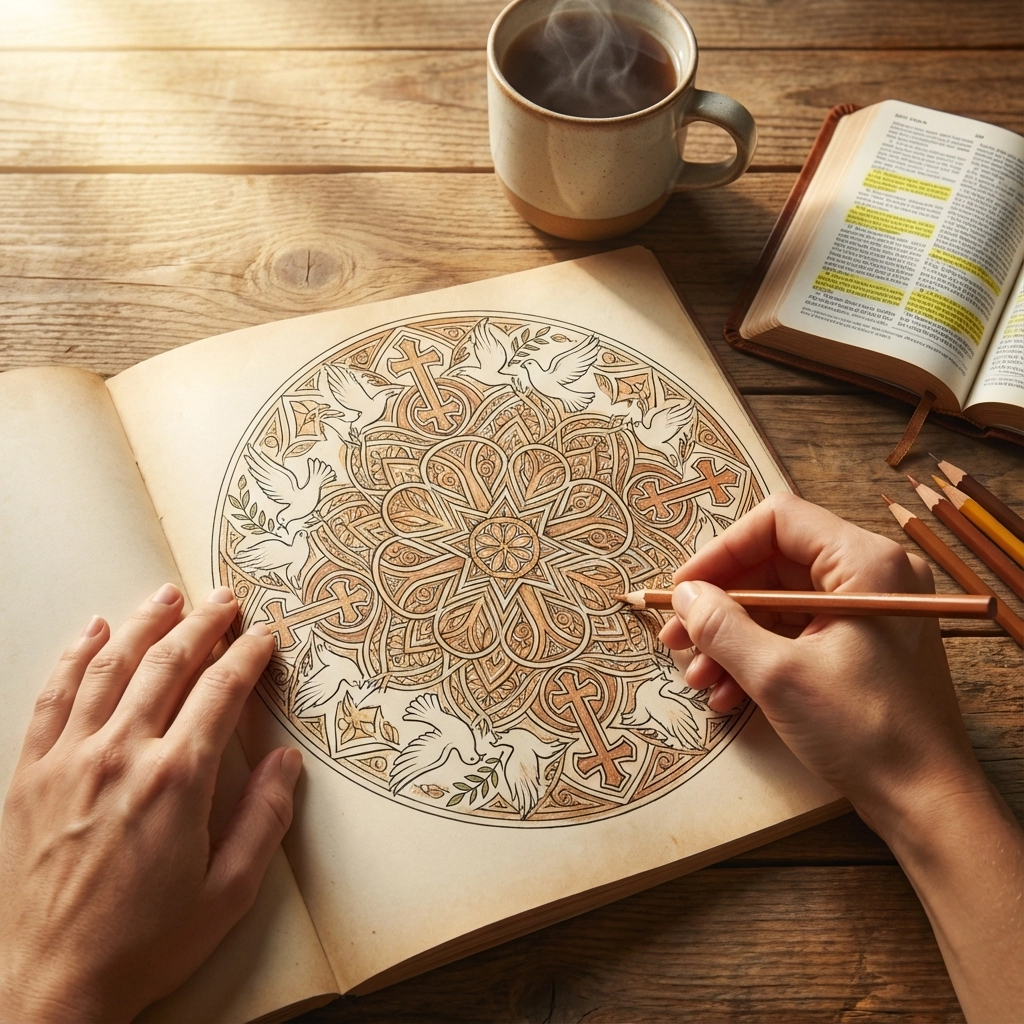
This scientific backing explains why creative worship practices like devotional coloring continue to find new audiences, even among younger generations who might have initially dismissed them as “just for kids.”
Beyond Coloring Books: The Creative Worship Movement
While devotional coloring books remain popular, they’re just one piece of a much larger creative worship movement. Churches across the country are integrating art-making into their services. Bible journaling has exploded in popularity, with entire communities dedicated to combining scripture study with visual creativity.
Priscilla Shirer, Bible teacher and author, regularly incorporates creative elements into her teachings, explaining that “when we engage multiple senses in our worship, we often find deeper retention and more meaningful encounters with God’s word.”
The “Inspire” series of devotional coloring books has tapped into this perfectly, combining themed devotions with coloring pages and space for creative journaling. It’s not just about staying within the lines anymore – it’s about creating sacred space through intentional creativity.
Who’s Actually Using These Books?
The demographic might surprise you. While you’d expect to find devotional coloring books primarily among older women, the reality is much more diverse. Young professionals use them for stress relief during lunch breaks. College students incorporate them into study breaks during finals week. Parents use them as a calming activity to share with their children.
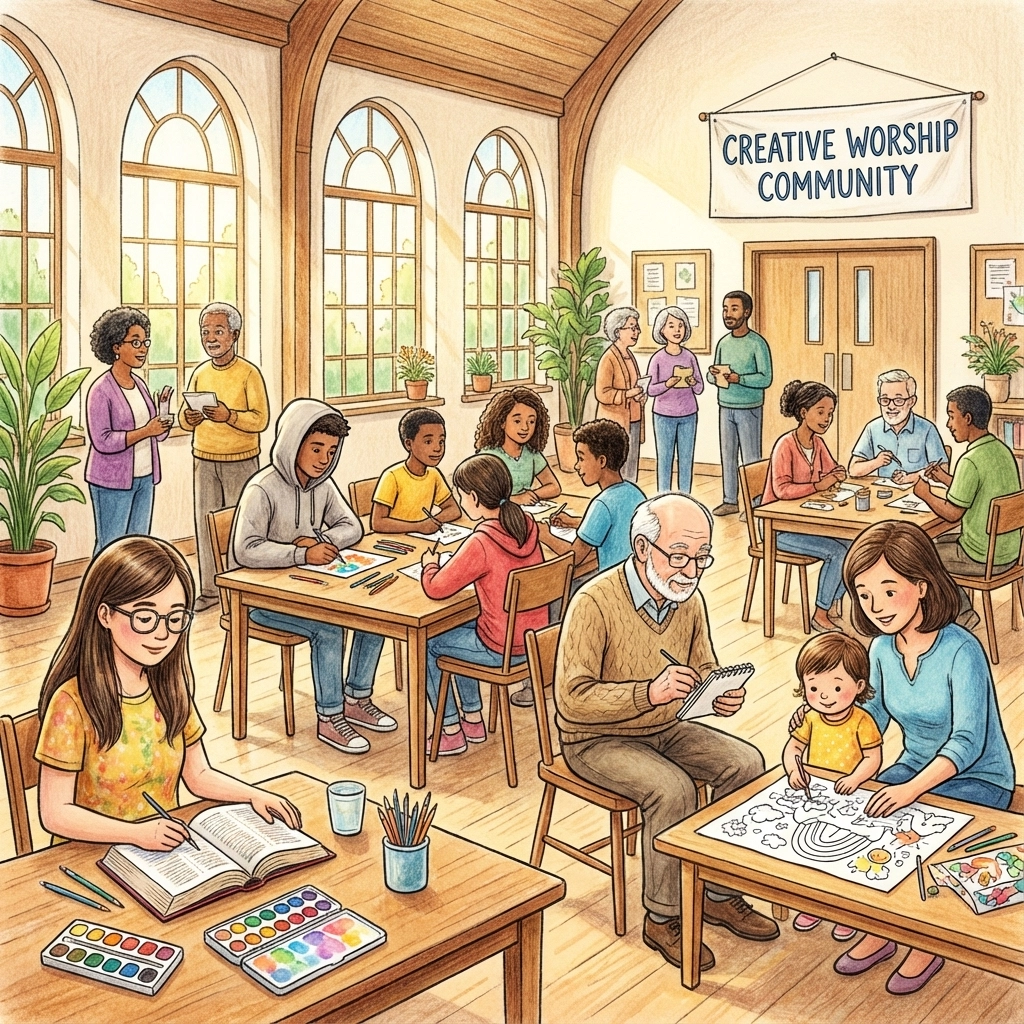
Youth pastors are reporting that teenagers, despite being digital natives, are drawn to the tactile, analog experience of coloring while reflecting on scripture. There’s something profoundly grounding about putting pencil to paper in our screen-saturated world.
The Psychology of Sacred Creativity
Psychologist and creativity researcher Dr. Mihaly Csikszentmihalyi’s work on “flow states” provides insight into why creative worship practices remain relevant. When we’re engaged in creative activities that match our skill level with an appropriate challenge, we enter a state where time seems to slow down and our minds quiet.
This psychological sweet spot is exactly what many people experience during devotional coloring. The activity is engaging enough to quiet mental chatter but simple enough not to overwhelm. It creates the perfect conditions for reflection and prayer.
Max Lucado, beloved Christian author, has noted that “God doesn’t call us to complicated spirituality. Sometimes the most profound encounters happen in the simplest moments.” This wisdom perfectly captures why creative worship practices continue to resonate.
Digital vs. Analog: Why Physical Books Still Matter
In an age where everything can be digitized, you might wonder why physical devotional coloring books remain popular. The answer lies in the intentional disconnect they provide. There’s something powerful about setting aside devices and engaging with physical materials.

The tactile experience of paper, the smell of colored pencils, the satisfaction of completing a page – these sensory elements contribute to the meditative quality that makes devotional coloring so appealing. Digital alternatives exist, but they haven’t replaced the original format.
The Future of Creative Worship
Looking ahead, creative worship isn’t going anywhere. If anything, it’s expanding. Publishers are experimenting with new formats – scratch-off devotions, watercolor meditation books, and even devotional adult puzzle books that combine scripture with problem-solving.
The key insight is that creative worship meets a fundamental human need that transcends trends. As Beth Moore, Bible teacher and author, explains: “We were created by a creative God, and when we create – even in simple ways like coloring – we reflect His image back to Him.”
Making Creative Worship Work for You
If you’re curious about incorporating creative worship into your own spiritual practice, start simple. Pick up a devotional coloring book that resonates with your interests – whether that’s scripture passages, inspirational quotes, or nature themes.
Set aside just 10-15 minutes a few times a week. Don’t worry about artistic perfection. This isn’t about creating museum-worthy art; it’s about creating space for reflection and connection with God.
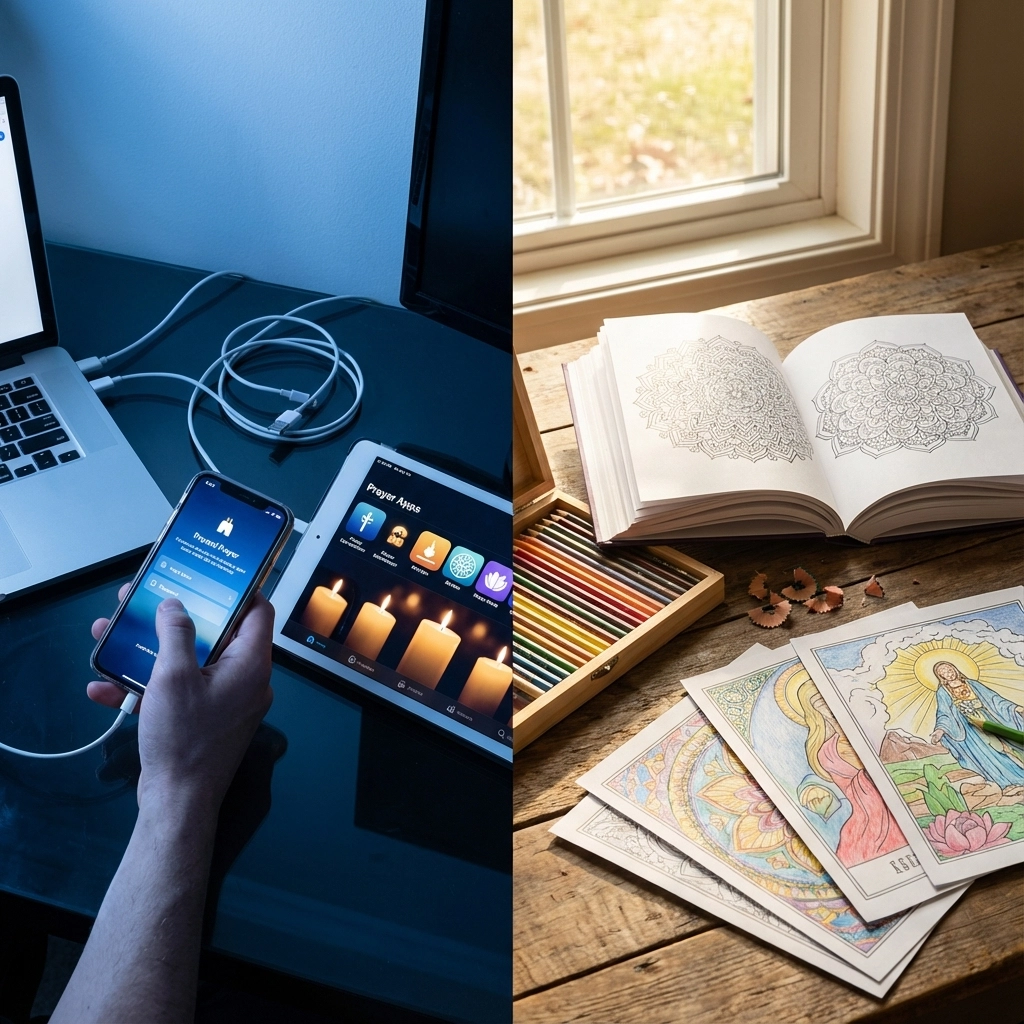
The beauty of devotional coloring books is that they require no special skills or expensive supplies. A basic set of colored pencils and a quiet corner are all you need to begin.
The Verdict: Very Much Alive
So, are devotional coloring books dead? Absolutely not. They’re evolving, adapting, and finding new audiences every year. The fundamental human needs they address – for quiet reflection, creative expression, and spiritual connection – are timeless.
In 2025, creative worship looks different than it did a decade ago, but it’s every bit as relevant. Whether you’re a longtime practitioner or someone who’s never picked up a devotional coloring book, there’s never been a better time to explore how creativity can enhance your spiritual journey.
The coloring books lining store shelves aren’t relics of a past trend – they’re tools for a practice that’s as old as humanity itself: seeking the sacred through the work of our hands.