





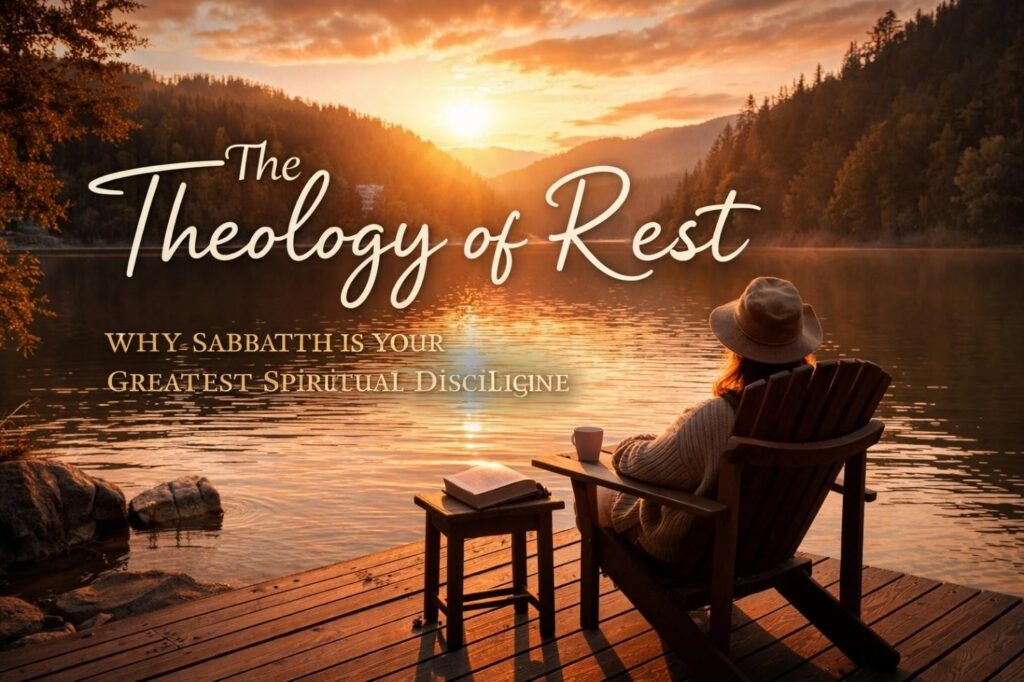
Let’s be real for a second. When was the last time you actually rested? Not just crashed on the couch scrolling through your phone. Not just “took a break” between tasks. I mean genuine, soul-deep, guilt-free rest.
If you’re like most women I know, the answer is probably “I can’t remember.”
We live in a world that glorifies the hustle. The early morning grind. The side hustle on top of the main hustle. The “I’ll sleep when I’m dead” mentality that somehow became a badge of honor. And honestly? It’s exhausting.
But here’s the thing, God never intended for us to live this way. In fact, He designed something completely different for us. Something radical. Something countercultural.
He gave us the Sabbath.
And no, it’s not just an Old Testament rule we can skip over. It’s actually one of the most powerful spiritual disciplines available to you as a believer. Let me explain why.
God Rested First (And He Wants You to Follow)
Before we dive into the “how,” we need to understand the “why.” And the why starts at the very beginning of Scripture.
Genesis 2:2-3 tells us that after God created the heavens and the earth, after speaking light into existence, forming mountains, filling oceans, and breathing life into humanity, He stopped. He rested.
Now, let’s be clear: God wasn’t tired. He didn’t need a nap. The Creator of the universe doesn’t get worn out.
So why did He rest?
He was setting an example. He was establishing a rhythm. He was showing us that rest is not the opposite of productivity, it’s part of the sacred order of creation itself.
When God rested on the seventh day, He wasn’t being lazy. He was enjoying what He had made. He was declaring that His work was complete and good. And He invites us into that same pattern.

Sabbath Isn’t About Rules, It’s About Relationship
Here’s where a lot of us get tripped up. We hear “Sabbath” and immediately think of a long list of do’s and don’ts. No working. No cooking. No this. No that.
But that’s missing the point entirely.
Sabbath isn’t primarily about what you can’t do. It’s about who you get to be with.
When you practice Sabbath, you’re making a statement. You’re saying, “God, You are at the center of my life, not my achievements, not my to-do list, not my career.” It’s an act of worship and trust wrapped into one.
Think about it this way: every time you choose to rest instead of hustle, you’re telling God (and yourself) that your worth doesn’t come from how much you accomplish. Your identity isn’t tied to your productivity. Your value was established long before you ever completed a single task.
That’s freedom, friend. Real freedom.
The Spiritual Problem Sabbath Solves
Let’s get a little deeper here because this is important.
At its core, Sabbath addresses one of our biggest spiritual struggles: self-sufficiency.
We live in a culture that constantly tells us we need to do more, be more, achieve more. And somewhere along the way, we start believing that our security, our okay-ness, depends on our own effort.
But Sabbath pushes back against that lie.
When you rest, you’re acknowledging that you don’t have complete control over your life. You’re admitting that the world will keep spinning even if you stop working for a day. You’re placing your trust in God’s provision rather than your own striving.
This is why Sabbath feels so uncomfortable at first. It requires us to let go of the illusion that we’re holding everything together. And that’s scary.
But it’s also incredibly liberating.

Sabbath as an Act of Rebellion
Here’s something I love about Sabbath: it’s actually kind of rebellious.
In a world that worships busyness, choosing to rest is a countercultural act. In a society that measures your worth by your output, stepping back is practically revolutionary.
The biblical roots of Sabbath actually connect to liberation. In Deuteronomy 5, God reminds the Israelites that they were once slaves in Egypt, and slaves don’t get days off. The command to keep the Sabbath was a declaration of freedom: “You are no longer defined by your labor. You are no longer enslaved to production.”
Every time you practice Sabbath, you’re echoing that same declaration. You’re saying no to the hustle culture that tries to enslave you. You’re refusing to let your calendar own you.
That’s powerful stuff.
Finding Contentment in a Culture of “More”
Can we talk about contentment for a second?
One of the sneaky things about hustle culture is how it feeds our discontentment. There’s always another goal. Another milestone. Another level to reach. And the message is clear: what you have right now isn’t enough.
Sabbath fights back against that.
When you regularly practice rest, you’re learning to be content with what God has already provided. You’re stepping off the hamster wheel of “more” and settling into the peace of “enough.”
This doesn’t mean you stop having goals or ambitions. It means you stop letting those goals steal your peace. You learn to find rest in God through Christ rather than in worldly definitions of success.
And honestly? That’s the kind of freedom most of us are desperately searching for.

Practical Sabbath for the Modern Woman
Okay, so all of this sounds great in theory. But what does Sabbath actually look like in real life? Especially when you’re juggling work, family, ministry, and about a hundred other responsibilities?
Here are some simple ways to start:
1. Pick your day (and protect it).
Sabbath doesn’t have to be Saturday or Sunday. Choose a day that works for your schedule and guard it fiercely. Put it in your calendar. Treat it as non-negotiable.
2. Define what rest means for you.
Rest looks different for everyone. For some women, it’s a quiet morning with coffee and Scripture. For others, it’s a long walk outside or time with family. Figure out what actually restores your soul, not just your energy.
3. Unplug intentionally.
Consider a digital fast as part of your Sabbath practice. Step away from emails, social media, and the constant pull of notifications. Give your mind space to breathe.
4. Practice saying no.
This might be the hardest part. You’ll have to turn down invitations, delay tasks, and disappoint some people. That’s okay. Sabbath requires boundaries.
5. Start small.
If a full day feels impossible right now, start with a few hours. Build the habit gradually. The goal is progress, not perfection.
The Eternal Rest We’re Practicing For
Here’s one more beautiful truth about Sabbath that I don’t want you to miss. Every time you rest, you’re practicing for eternity.
Christian theology teaches that Sabbath rest is ultimately fulfilled in Christ. The rest we experience now, imperfect and interrupted as it may be, points to the eternal rest we’ll experience in God’s presence forever.
Hebrews 4:9-10 says, “There remains, then, a Sabbath-rest for the people of God; for anyone who enters God’s rest also rests from their works, just as God did from his.”
Sabbath isn’t just about this week or this season of life. It’s a glimpse of what’s coming. A taste of the peace that will one day be permanent.
Your Invitation to Rest
Friend, I know life is busy. I know the demands are real. I know it feels like everything will fall apart if you stop moving for even a moment.
But I’m inviting you to try something different.
Choose rest. Not because you’ve earned it, but because God designed you for it.
Let Sabbath become your greatest spiritual discipline. Let it reshape how you see yourself, your work, and your God.
You weren’t made to hustle your way to wholeness. You were made to rest in the One who already made you whole.
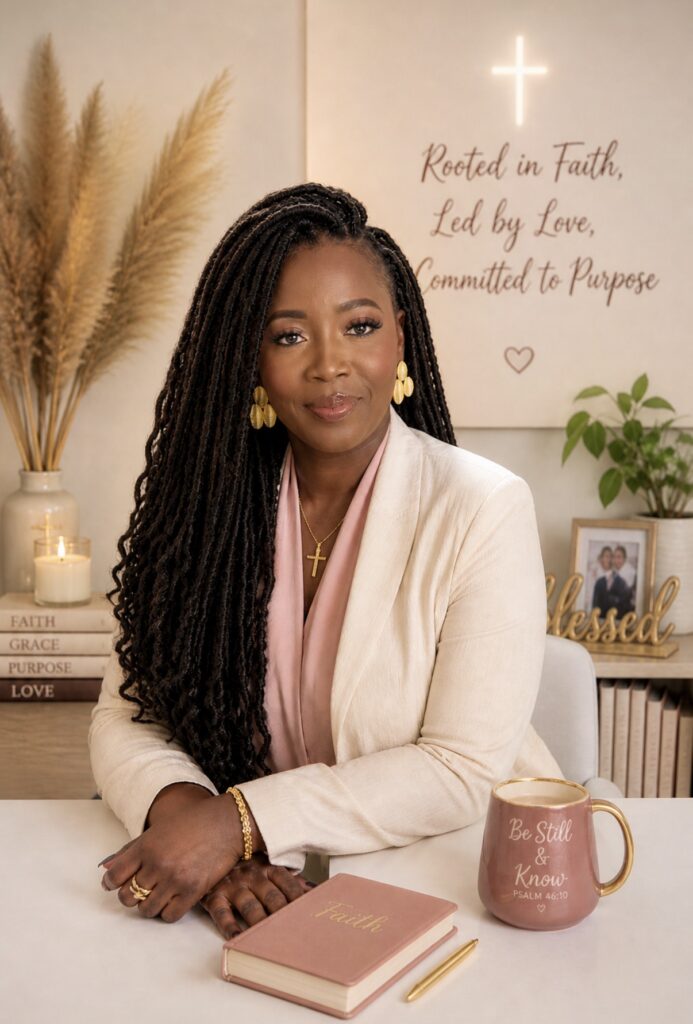
Dr. Marie K.
Educator | EL Advocate | Blogger
References:
- Brueggemann, Walter. Sabbath as Resistance: Saying No to the Culture of Now. Westminster John Knox Press, 2014.
- Foster, Richard J. Celebration of Discipline: The Path to Spiritual Growth. HarperOne, 1998.
- Buchanan, Mark. The Rest of God: Restoring Your Soul by Restoring Sabbath. Thomas Nelson, 2006.
- Piper, John. “The Sabbath and the Lord’s Day.” Desiring God, 1985. https://www.desiringgod.org
- Allender, Dan B. Sabbath. Thomas Nelson, 2009.